Saturday, August 31, 2013

What I'm Playing...Solo with the Nelson Symphony

On the 28th of September, so a bit less than a month from today, I will be performing the 1st movement of the Walton Viola Concerto with the Nelson Symphony.

The Nelson Symphony puts on a "Solo Spotlight" concert every year, showcasing young soloists from around New Zealand who send in audition tapes and are selected to perform with the orchestra. Usually there are around six to eight soloists, on a variety of instruments. I have previously played with them three times in these concerts, (mainly due to living in Nelson and playing as a member of the orchestra). I performed all but the first movement of the Telemann concerto for two violas in 2009, and then the following year I did the third movement of the Tchaikovsky Violin Concerto, and after that, the second movement of the Mozart Sinfonia Concertante, on violin. Now, two years after the Mozart, I'm going back to make what feels like my "real" viola debut, playing Walton. I'm really thankful that the Nelson Symphony gives young musicians this opportunity, it can really show us whether a solo career is something we want to strive for or not. And as an added plus, Nelson is a beautiful little place.

Smudged and scribbled-on copy - clearly much loved!

Those concerts with the Nelson Symphony, or any amateur orchestra really in my experience, always end up being so absolutely magical in that the performers and the audience so enjoy the music. All the players are trying their best to produce greatness together, even outside of their daytime professions, and they always succeed admirably.

It's a great thing to be a part of and a very special feeling to have after a concert, going outside into the darkness, walking along the streetlamp-lit pavement to drive home and tumble into bed, with souls satisfied by the uplifting experience and inspiring young artists. It's what music is truly all about.

Monday, August 26, 2013

Audition Preparation: How to Practice Orchestral Excerpts

As I've written about earlier, I am currently preparing a selection of viola audition excerpts for an audition and a scholarship. For anyone who plays an orchestral instrument, learning excerpts is an unavoidable part of getting an orchestral job, so it's important to learn how to effectively prepare and practice them. Once you get the hang of it, doing excerpts can be rewarding and even fun to play! Here are some of the tips and rules I go by when working on orchestral excerpts:

1. Start slowly!
Learn the notes and rhythms and dynamics correctly the first time by playing so slowly you can't get them wrong or miss any detail in the music. It doesn't matter if that's at quarter note (or crotchet) = 40 on the metronome. This is so important, because every time you play something wrong, even when just learning something, you are building in the wrong habits.

Learn so that you are able to sing the notes as well, so that your knowledge of the music is rock-solid. This is especially important for excerpts with a lot of accidentals or unexpected notes, because playing any note wrong in an audition (even if the passage is really complicated) is simply unacceptable.

2. The metronome is your best friend...
And worst enemy (when it starts to drive you crazy). No one can argue with the metronome. There have been times that I've practiced an excerpt, and then put a metronome on to discover that I am rushing a section of it. Do not let these issues go undiagnosed - use the metronome to find out where you tend to rush or drag, and then use the metronome some more to treat these issues! You can use it for subdivisions too, putting it on twice or four times the actual speed so that the metronome beats smaller divisions of the beat you are playing for extreme precision.


3. Look on Youtube, watch videos
Watch other people playing the excerpts you're doing, if they're standard ones there will probably be videos of people playing them on Youtube. There are even some videos on how to practice standard excerpts like Don Juan and Mozart 35, with specific practice techniques for the commonly difficult parts.


4. Listen to recordings of the piece (with full orchestra)
You've got to know the context of your excerpt as well as be able to play it so that for example, if there's a flute solo above what you're playing, you're not ignorantly blasting out your less interesting line. The audition panel has heard and probably performed the work multiple times, they will know how your part should be played and which nuances you should use. Not to mention the correct tempo. You've got to know that too. Listen to multiple recordings to choose a version that seems consistent.

Some people like to play along with recordings too. Personally I don't (lest I start to develop any undesirable characteristics of the recording), but I prefer to visualize what it would be like to play the excerpt in its orchestral context while I'm listening.

5. Use short bursts of practice
Excerpts are short, usually a few lines to a page in my experience. You can most effectively work on these snippets of music by going through them and working on any problems, putting the instrument down for awhile to let your brain absorb the information, and then going back to it after a little break and some mental visualization. This is more productive than hammering away at five lines of music for two hours hoping it'll just magically improve with repetition.

Repetition is better when you have learned something well and are aiming to improve your consistency.

6. Engage your brain with different practice techniques
So you've learned the excerpts pretty well? Good. Now, practice them with rhythms, difficult bowings, at different speeds, anything to engage and challenge your brain. String crossing passage? Play it on all open strings for bow work. Left-hand passage? Do it without the bow, making sure your hand is relaxed. These techniques will ensure that you know the excerpt inside out, and can recover quickly if a minor mishap (like doing a wrong fingering or bowing) happens on audition day. Practice runs from the end, (or top if it goes up) working backwards, like Roger Benedict says to in his Youtube tutorial on Don Juan, so that you always get the final arrival (or top) note even if you happen to miss one at the beginning.

7. Play for people, and record yourself
Finally, play for people. Play for other musicians to get musical feedback, and play for non-musicians to get practice playing your excerpts in a higher-pressure situation than you would get practicing by yourself. You can even imitate the audition situation and play to them behind a curtain or screen if you wish.

Record yourself as well, you are your harshest critic and you are the one with the power to change how you sound. Do this multiple times to keep track of your own progress - it could happen that an excerpt you were once happy with has since deteriorated or become interpretatively too free or rushed or other flaw you've stopped noticing because you think it's still all good. Regularly checking up on yourself will prevent this. Even if you've reached a point where there's nothing to change in your recordings it's reassuring to know that you are staying ultra-consistent.

Also, if you have the chance, talk to teachers and members of orchestras who already know how to get into an orchestra and may be able to tell you what you need to focus on so that you get in too. Maybe they have advice for how to approach the audition day as well.


Are there any other techniques musicians out there use for working on orchestral excerpts?

Happy practicing, and good luck!


Saturday, August 24, 2013

Go to Concerts, Good and Bad

My first music teacher once told me to see all the concerts I possibly could, (chamber, orchestral, solo, etc!) because that's one of the best ways to learn, and also how you learn some of the things that can't be taught.* That advice has only become more and more true as I become more advanced in my own learning.

One can of course learn from good concerts, in a monkey-see-monkey-do kind of way. This is valuable in that you can see someone who is successful in action, someone who has mastered your trade, and someone who knows what to do from experience and is showing you what you'll be doing if you get to that level. Hopefully by watching the great players, you can absorb some of what they've got, and be inspired to keep striving for your goals.

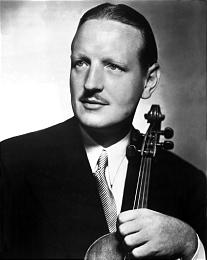
And for the masters of older generations, there are recordings and Youtube videos, though they're never the same as seeing something live! Check out viola virtuoso William Primrose (pictured) and his amazingly relaxed left hand (in Paganini, no less!) here.

However, one can also learn from the "bad" concerts, or concerts where you didn't enjoy the way someone was presenting something. Doesn't matter if it was a bad setup, bad venue, bad program or even a downright bad performance, you need to be looking at these with the idea of learning from them. You can see what is effective and what is not effective by watching the mistakes of others, and learn from everything around you. And even more importantly, you may even find out new things about yourself and your personal tastes if you see something you like that you hadn't thought to try, or see something you didn't like that maybe you still do yourself because you didn't realize how it sounded or came across. Specifically defining what you want to produce is the first step to actually producing those results.

This is the way to attend concerts and events with a positive attitude and no regrets. Rather than complaining about how lacking a performance was or wishing you hadn't wasted the time and money, use the experience, good or bad, as valuable information about what you do and don't like and how you are going to present yourself when you perform for others in the future. As an added bonus, the people around you will appreciate your more positive attitude too!


*Arguably, nothing can be taught, as teachers serve as guides for a student's own learning. More on this later!

Tuesday, August 20, 2013

Sunday Jazz


A couple of days ago, the Ken Avery Combo Competition took place at the Chicago Sports Bar in Wellington, NZ. Five jazz bands from the jazz department of the New Zealand School of Music played two pieces each, from the jazz standards repertoire for a total prize pool of $2,000. The competition was set up in memory of Wellington "jazz legend" Ken Avery, who died in 1983, and it was judged by three "prominent jazz practitioners."


Pictures of American presidents
The Chicago Sports Bar provided a great atmosphere for the event. It has an American theme, with signs of American sports teams and presidents hanging from the walls, and it had good lighting for the performance, (probably partly due to the fact that it was an afternoon event).


The food also seemed pretty good - my conducting fellow (boyfriend, who is going to be a conductor) and I had planned to have dinner elsewhere in the evening so we just had an order of chips, plus some of the nibbles the Wellington Jazz Club had ordered for the event. Best bowl of fries I've had in a long time! Perfect thick-cut shape, and the potatoes had a fantastic texture.


As for the music - well, I don't listen to a lot of jazz (which is what attracted me to this event) but it was really excellent. The groups all had different styles and energy levels, but there was so much of both - that is, style and energy - it was really refreshing. The players were all able to show their own personality through their solos, and some did so with their outfits as well, with shiny silver suits, colorful neckties, or bandannas and other accessories. There were groups that did more slow, deep, and thoughtful numbers, and groups that kept the stage electric with energy and interaction between the players. Every group had a drummer and a double bassist, but the combos varied in the other instruments, some adding saxophones, guitar, piano, and/or trombone to the mix. There was even a group with a male vocalist, who did the popular song 'LOVE' by Nat King Cole.  (You know, the one that goes "L, is for the way you look at me").

Sunday, August 18, 2013

Personal Branding

A couple of weeks ago, we had a guest workshop at the New Zealand School of Music on personal branding. As musicians, when we're done studying we're going to have to figure out how to get work, be it gigs, teaching, or getting people to come to our recitals and performances. This not only applies to classical musicians, singers, jazz and rock bands, but also to people outside the music field who work under more independent conditions like writers, actors, and business owners.

The idea is that everyone has their own unique perspective on what they do, so no two people, even though they have a lot in common and may do the same thing, (like playing the viola) have the same things to offer. What you've got to do to have an edge over competition is play to your strengths as well as highlight what is different and special about you - what sets you apart from the crowd. As Personal Branz (the company who came and held the workshop) says on their Facebook page, it "moves you from being insecure to indispensable" when you have found your niche, and are offering to fulfill a need the way that only you can do best.


Handouts from the lecture
We first explored what our strengths were by finding three words that define ourselves. Then we expanded on that by defining what we do and what we aspire to do. The way to get people's attention right from the start is to tell people about the results of what you do. Their example was that if someone asks an author of children's books, "What do you do?" and the author responded with, "I stimulate the minds of children to help them learn and enjoy reading" it is much more interesting and specific than saying "I'm a writer." It will also lead to further questions, like "how do you stimulate the minds of children?" which then leads you to further explanation, and potential business connections.

So, instead of saying "I'm a musician" or "I'm in a band", we should say things like "I'm part of a virtuosic violists movement, encouraging the performance of beautiful and difficult music and showing people it's possible to go beyond expectations and do difficult things" or "we expose New Zealand roots music to the wider public, as it's a great and valuable genre that needs more recognition".

Seems a little strange and even a bit over the top when you're trying to say things like that straight away in a real conversation, but you can see how it would get real results, as opposed to giving generic answers people have heard time and time again and aren't really interested in.
Definitely something to think about!

The lecture from Personal Branz was actually partly the inspiration for me to start this blog, as a space for me to use my writing strengths together with my passion for music and communicate my own personal brand. You can check them out on Facebook here: https://www.facebook.com/PersonalBranz 


Saturday, August 17, 2013

What I'm Playing...Orchestral Excerpts

Right now, I'm in the daunting situation of having to prepare three quite challenging excerpts for this Tuesday, on violin: Don Juan, the infamous Schumann Scherzo, and Berlioz Symphonie Fantastique, beginning of the 1st movement. I definitely did not leave myself enough time to prepare these adequately, and it's a bit frustrating to have to do these on violin knowing I probably won't use them again. Luckily it's only for a university assessment though, not a real audition for a position or scholarship, and the assessment may not even count towards the final grade for the orchestra course. On the plus side, the second opera season I was playing in this year finished last night, so I'll have some more time to practice!

I've encountered many more orchestral excerpts on viola. Here's my viola list:

Beethoven Symphony No. 5, 2nd Movement
Berlioz Carnival Romain Overture
Brahms Variations on a Theme by Haydn, Variation 1
Britten Four Sea Changes, 4th Movement
Mendelssohn Midsummer Night's Dream, Scherzo
Mozart Symphony No. 35, Movements 1 and 4
Shostakovich 5, 1st Movement
Strauss Don Juan
Strauss Ein Heldenleben
Tchaikovsky Serenade, 1st Movement and Waltz (2nd movement)
Tchaikovsky Symphony No. 5, 3rd Movement

I'd say the most daunting of the above for me to learn was the Strauss Ein Heldenleben, due to high shifting, tone quality, and speed. What a great piece, though!

Also, learning Don Juan on violin has made me realize how much more difficult it is to play the excerpt on viola, in terms of tone quality at that speed. It's a lot more work making something that fast sound as good on viola...so at least that part of it will be easier this Tuesday on violin! (Getting the notes in the chromatic-y section after figure C though, not so much...)

The ones I'm currently preparing are the Berlioz, Brahms, Mozart, Shostakovich, Strauss Don Juan, Tchaikovsky Symphony and Serenade - a total of eight different excerpts to be used for two different auditions - there are a lot of doubles. It's smart for viola players (and violinists too) to have the core standard orchestral excerpts always in rotation in their practice, because you never know when opportunities will come up and chances are, you're always going to have to play Don Juan!


See the hilarious misspelling of "Don Juan"...

Right, practice time!


Monday, August 12, 2013

What I'm Playing...University Recitals

For the final recitals at the New Zealand School of Music, a 3rd year student (finishing a Bachelor's degree) needs 45-55 minutes of repertoire. I am also doing 2nd-study viola, at first-year level, so I need 15-20 minutes of repertoire for that. This is the repertoire I'm doing for my final recitals:

Violin

Beethoven Sonata No. 4 in A minor, for piano and violin
Sibelius Violin Concerto - 1st and 2nd movements
Epitaphium - John Rimmer (New Zealand composer. This unaccompanied piece was written in memorial of the death of Alex Lindsay, a former concertmaster of the NZSO who died suddenly in 1974. Epitaphium is a latin word meaning "funeral oration." This piece has interesting staging, using five music stands arranged in the shape of a cross).

Viola

Bach Viola da Gamba Sonata No. 3 - 1st movement
Vieuxtemps Sonata in B-flat Major - 1st movement

Although I've got a lot more repertoire to learn, these programmes are otherwise seemingly less ambitious than previous programmes I've done, which have included more technically virtuosic works by Bach, Prokofiev, Wieniawski and Saint-Saens. My aim is to achieve a more musical and flawless execution of these works, to conclude and exit my degree with style rather than fireworks...and ideally making my last serious violin performance a good one.

In addition to performing we also write programmes (and programme notes) and do a viva voce (or kind of conversation about our programme), which make up part of our final grade.

(I do wish I had a piano at home to practice the accompaniment parts on so as to fully know the works, as I've got a lot of collaboration work in the sonatas, and not as much rehearsal time as I'd like, but oh well.)

Overcoming Disappointment and Setbacks

Out of all the various occupations in life, those in the field of fine arts (musicians, artists, actors) have to deal with disappointment and setbacks a LOT.

For musicians, this includes not getting into orchestras, (or not even getting an audition in some cases, as recently happened to me!) not winning competitions, not not getting gigs, not having a successful chamber music group, and not getting into a good school or getting scholarships. The best-quality instruments cost a lot of money too, and require constant maintenance. Without a good job, not all musicians can afford a good instrument. 

Injuries can become major setbacks for us too. RSI (repetitive stress injury) affects so many musicians, preventing them from practice and improvement. And the road to recovery is often a long one.

And even when we've reached a very high level and gotten our first degrees, it is difficult to find employment. Musicians often go for audition after audition, or keep entering competitions without success. The competition is fierce. Every musician out there wants to live their dream of performing for their living, and to get a job you've got to show that you've got something no one else has. Often you've only got minutes - or even seconds - to prove this...make a mistake at the beginning of an orchestral audition and you may well have blown it, because there'll be quite a few others who didn't make that mistake. Doesn't matter that you CAN play it perfectly, if it doesn't go well on the day, in those few seconds. Pressure? Definitely. 

We all (even non-musicians) have to learn to deal with failure. We cannot let our disappointments define us and obsessively question everything that happens: chances are, you won't find out the real reason why you didn't get an audition or position, and many factors could have taken part in the final decision. Don't let it get to you, and don't let those setbacks make you question everything about what you do and how you do it. Just try to learn (from your personal experience of the situation, if you can't get feedback) for next time, so you can feel more confident when you try again.

Finally, remember that we do what we do because it's such an integral part of our lives, a passion that we can't bear to give up. Doing something else is not an option for us, even if we have the ability. 

If we forget this, or if at some point it stops being true, then it's impossible to continue. But if we remind ourselves of why we are musicians and stay true to our dreams, hopefully that will give us the drive to keep working at it and trying our hardest and eventually reach success. Never give up - there will always be another chance, another audition, another competition, and all we can do is can make sure we're better prepared for the next one.

We can all adopt a better mindset towards failure if we heed the following advice from the American industrialist Henry Ford: 


"Failure is only the opportunity to begin again, only this time more wisely." 


Sunday, August 11, 2013

From the Concert Hall...Magnificent Mozart


I recently attended an NZSO concert of Mozart, conducted by Andrew Grams.

The programme was the Overture from The Abduction of Seraglio, followed by the Sinfonia Concertante and then after interval, Symphony No. 40 in G minor.

It was really pleasing to see a full turnout for this popular programme.


The Sinfonia Concertante is a work I've played myself, on violin, with a fellow violist. We even had the opportunity to play the second movement solo with an orchestra, so I've had firsthand experience with the piece. It was amazing to get to see it played live! To me, the third movement especially is the epitome of Mozart and the character of his music at its finest: lively, whimsical, even a bit ironic. (Feel free to disagree - I may be biased by a particular affinity for final concerto movements). The combination of violin and viola gives Mozart two characters to use, and (as music teachers say) the operatic style of the writing is very apparent.


The soloists (Vesa-Matti Leppänen and Julia Joyce, usually the concertmaster and principal violist of the orchestra) played beautifully, almost too much so in that they made me think about how music is about more than just sounding beautiful. The characters of music sometimes demand that you sound harsh, strained, and angry, as well as silly, playful, or cute. And these sounds sometimes require a less beautiful and graceful style, but they are evocative and moving nonetheless. Especially in the third movement of the work, it seemed that the beauty and grace of the (very talented and accomplished) players overshadowed the playful, chirpy, and fun aspect of the music.


It was amusing to hear the audience gasp in delight at the very recognizable opening of Symphony No. 40. This work from late in Mozart's composing career is filled with contrasts and complexities, and it's so easy to spot the inspiration for Beethoven's style here. Moments of sunshine transform into anguish and passion through split-second transitions and there are frequent unexpected turns in the melodies. Watching the first couple of movements it occurred to me how difficult it is to play Mozart, both solo and orchestrally, and what a fine performance it was. The first movement is very rich in counterpoint and the orchestra held it together admirably. Again I found the fourth (and final) movement the most impressive both in playing and conducting. Andrew Grams' style was absolutely sublime in this last movement, reminiscent of Carlos Kleiber (my personal favorite conductor) at times, not showing the orchestra too much when they didn't need it, but drawing attention to interesting features that the audience needed help hearing, like scale runs in the 2nd violins and winds.


All in all, one of the most satisfying orchestral concerts I've attended in a long time.


Thursday, August 8, 2013

My Inspiration


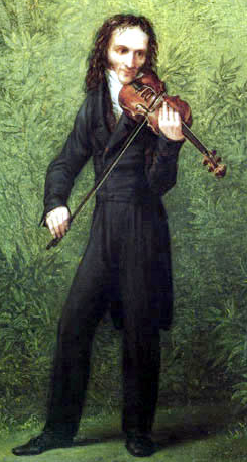
Niccolò Paganini, 18th-century Italian violinist, violist, 

guitarist, and composer. My idol and inspiration.

Music and Me

I've recently started a personal blog, and decided it'd be a good idea to create a separate one for my profession and main passion in life. This is a musically-oriented blog for those music-lovers, musicians, and people interested in learning music.


The name of my site, "The Paganini Violist", describes my main musical goal of being known for successfully playing difficult repertoire on the viola. Undertaking challenges is what I like to do, and succeeding in overcoming obstacles is so rewarding. So many violists seem to shy away from playing Paganini, and difficult repertoire in general, and I want to change this mindset through my playing and my results.


About me, and music:

I am a classical musician currently pursuing a Bachelor of Music degree at the New Zealand School of Music (Victoria University), in Wellington. I am majoring in the violin, taking the viola as a second instrument. Once I finish studying I will focus more on the viola - because I'm in my final year, I'm unable to switch while doing this degree. But I have come to realize that the viola is the instrument that strikes the right chords (musical pun intended) for me. I wrote about this decision on my other blog, here. It's quite a common thing for viola players to be "reformed violinists." Not saying that violinists are criminals - but for me it's definitely involved a change that's relevant to my character as well as the instrument itself. For me at this later stage of learning (in university), switching to viola was like what I'd imagine "coming out of the closet" would be like...being a "violinist" was quite ingrained in my personality and in the perceptions my friends and colleagues had of me, so my switch was at first very confusing for me, and surprising to them!

I also play the piano, have dabbled in percussion and bagpipes (just the chanter though!) and have just started to learn the trumpet. I've taken a course in conducting as well, and hope to do more of that in the future too.

While I'm studying, I earn my living by teaching violin and piano with two different music schools as well as privately, and really enjoy guiding people in their musical learning. And when I can, I play gigs with string duos, trios or quartets, play in operas or ballets, and do orchestral work.


Music is great for making people think, and can stimulate new ideas and new creativity. Music can move people to tears or anger, but also spark great energy as well, making people want to sing, dance, clap their hands, and jump for joy.


I aim to expand my own horizons in music, and therefore hope that eventually this blog will be relevant to non-classical musicians as well as classical musicians. (I've already had one successful public experience with improvising on the violin, not to mention a couple of other unsuccessful experiences!) All genres of music have value, and it's important that the genres can peacefully coexist - that way everyone has something that they like to listen to, and people can produce whatever takes their fancy!